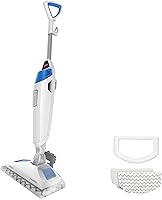
Steam Cleaners for Floors: What to Know Before You Buy
A steam cleaner for floors is best for sealed hard surfaces when the floor maker allows steam. Match the machine to your flooring, cleaning routine and need to scrub, vacuum or wash.
On this page (8 sections)
- What does a steam cleaner for floors do?
- Which floors can you safely steam clean?
- Which type of floor cleaner fits your routine?
- Which features matter when choosing a floor steam cleaner?
- Which steam cleaner for floors should you consider?
- How should you use a steam mop on floors?
- How do you maintain a floor steam cleaner?
- How do you choose the right steam cleaner for floors?
A steam cleaner for floors works best on sealed hard floors that the flooring maker says can handle steam. Choose a steam mop for pad-based cleaning, a scrub model for stuck-on messes, or a wet-dry machine if you also need to pick up liquid and debris.
Check the floor-care guidance before you buy. Heat and moisture can damage some finishes, seams and floor materials even when the surface looks sealed.
This guide explains how to match the cleaner to your floor, compare useful features and decide when a different floor machine makes more sense. For a product-by-product comparison, see our best steam cleaners for floors.
What does a steam cleaner for floors do?
A floor steam cleaner heats water and sends steam to a cleaning head or pad. The pad wipes away loosened dirt, while steam reduces the need for a separate cleaning solution on models designed for water-only use.
A steam mop is not a vacuum. Sweep or vacuum first to pick up dry grit, crumbs and hair.
Then mop with a clean pad. This helps keep debris from spreading across the floor.
Steam cleaning and sanitizing are not the same promise. Some brands describe sanitizing performance under specific conditions, so follow the model's directions if that claim matters to you.
Which floors can you safely steam clean?
Use steam only on a floor whose manufacturer approves it. Sealed tile and some sealed hard floors may be suitable, but material name alone does not confirm that steam is safe.
| Floor type | What to check before using steam |
|---|---|
| Ceramic or porcelain tile | Check grout condition and the floor maker's cleaning guidance |
| Sealed hardwood | Confirm steam is approved for the finish and floor construction |
| Laminate | Check the specific floor's warranty and care instructions |
| Vinyl plank | Confirm steam use is allowed for the exact product |
| Stone | Check both the stone and its sealant care instructions |
| Unsealed wood or damaged flooring | Avoid steam unless the floor maker explicitly approves it |
Steam can pass through gaps or worn seams and affect the layers below the surface. It can also soften or dull some finishes.
Stop if you see moisture collecting, a change in sheen or lifted edges.
Read our guides on steam mopping laminate floors, steam mopping vinyl floors and using a Shark steam mop on hardwood for floor-specific questions.
Which type of floor cleaner fits your routine?
Choose a steam mop for regular pad-based cleaning on approved hard floors. Choose a wet-dry floor machine when picking up spills and loose debris in one pass matters as much as steaming.
| Cleaner type | Best fit | Main trade-off |
|---|---|---|
| Basic steam mop | Routine cleaning on compatible sealed floors | Does not vacuum up dry debris |
| Scrubbing steam mop | Stuck-on dirt where rotating or scrub pads help | More moving parts and a different pad setup |
| Wet-dry floor cleaner | Mixed wet and dry messes | Often needs more cleanup after use |
| Steam cleaner with attachments | Floors plus detail cleaning, if supported | Can take longer to set up and store |
The phrase “steam cleaner” can refer to several kinds of machines. Our guide to what a wet-dry floor cleaner is explains how those machines differ from steam mops.
How does a steam mop differ from a steam cleaner?
A steam mop is a floor-focused machine with a mop head and pad. A larger steam cleaner may include attachments for other surfaces, depending on its design.
For hard-floor shopping, compare the cleaning head, steam controls, refill method and approved surfaces. If you are deciding between a mop and a broader steam machine, see steam mop vs steam cleaner.
When does a wet-dry cleaner make more sense?
A wet-dry cleaner makes more sense when you want to vacuum and wash messes together. Some models also use steam, but their tanks, brush rolls and after-use cleaning routine differ from a steam mop.
The Bissell CrossWave HydroSteam Deluxe 3515G is designed to vacuum, wash and steam floors, with separate clean- and dirty-water tanks. For a closer look at that machine type, read our wet-dry floor cleaner guide.
Which features matter when choosing a floor steam cleaner?
Focus on floor compatibility, steam control, pad care and maneuverability. A feature only helps if it fits your floor and the way you clean.
Steam settings
Multiple steam settings let you adjust output for quick refreshes or tougher messes. A no-steam mode may suit delicate sealed floors, but it does not make an incompatible floor safe for the machine.
Cleaning head and scrubbing action
A standard pad head wipes the floor as you move it. Rotating scrub pads or a flip-down scrubber can help with stuck-on dirt, but they do not replace checking whether the floor can handle steam.
Water tank and refilling
A removable tank can make filling easier. Tank capacity affects how often you stop to refill, but a larger tank can add weight and does not guarantee better cleaning.
Pads and upkeep
Washable pads reduce the need to keep buying disposable ones, but they still need regular washing. Check whether replacement pads are available and follow the care directions so dirty pads do not spread residue.
If pads need a refresh, see how to clean steam mop pads. For water questions, read whether a steam mop needs distilled water.
Cord, steering and storage
A longer cord can reduce outlet changes across a room. Swivel steering helps around furniture, while the machine's height and storage shape matter if closet space is limited.
Which steam cleaner for floors should you consider?
The right pick depends on the cleaning job. These options cover rotating scrub pads, a flip-down scrubber, adjustable steam modes and a combined vacuum-wash-steam design.
Shark Steam & Scrub S8001
The Shark Steam & Scrub S8001 suits buyers who want rotating pads and several steam modes for sealed hard floors. It has light, normal and deep modes, machine-washable pads and a removable tank.
Shark says the S8001 is designed for sealed hardwood, marble, tile, stone, laminate and vinyl. Check your exact floor's care instructions before using steam, especially on laminate or wood.
See our best Shark steam mops for more options from the brand.
Bissell PowerFresh 1940A
The Bissell PowerFresh 1940A suits buyers who want three steam settings and a flip-down scrubber. Its microfiber pads are reusable and washable, and its removable water tank holds 16 fluid ounces.
Bissell describes it for sealed hardwood, tile, granite and marble. Its 23 ft cord can help you clean farther before changing outlets, though the cord still needs to be managed around furniture.
For more options, browse our best Bissell steam mops.
Bissell SpinWave SmartSteam 3897A
The Bissell SpinWave SmartSteam 3897A suits buyers who want powered scrubbing with steam controls at the handle. It offers two steam levels and a no-steam option, plus washable microfiber pads.
Bissell says the pads rotate up to 230 RPM. Its LED display shows cleaning modes and steam readiness, and its larger tank is designed to reduce refill stops.
Bissell CrossWave HydroSteam Deluxe 3515G
The Bissell CrossWave HydroSteam Deluxe 3515G suits buyers who want to vacuum, wash and steam in one machine. It has separate clean- and dirty-water tanks and a self-cleaning cycle for the brush roll.
Bissell describes it for tile, sealed wood and laminate, among other surfaces, and says it can refresh area rugs with steam. Confirm compatibility for your exact flooring and follow the machine's instructions for cleaning formula and maintenance.
For a model-specific breakdown, see our CrossWave HydroSteam review.
How should you use a steam mop on floors?
Use a steam mop only after checking that the floor is compatible, then follow the machine's instructions. Sweep or vacuum first, use a clean pad and avoid leaving the head still in one spot.
- Check the floor maker's care instructions and the cleaner manual.
- Remove loose dirt and hair.
- Fill the tank as directed.
- Select the steam setting approved for that floor.
- Move at a steady pace and avoid lingering in one place.
- Let the surface dry before walking on it or replacing rugs.
Do not use steam on a floor with open seams, peeling finish or visible damage unless its maker allows it. Stop if the surface changes or moisture gathers around joints.
For a brand-specific walkthrough, see how to use a Shark steam mop or how to use a Bissell steam mop.
How do you maintain a floor steam cleaner?
Empty or store the machine as its manual directs, and wash pads after use. Regular care helps prevent residue and odors from building up on the cleaning head.
Let the machine cool before removing pads or handling parts near the steam outlet. Wash pads according to their care labels, and replace them when worn or unable to pick up dirt.
Use only the water and cleaning solutions permitted by the manufacturer. Do not pour detergent or fragrance into a steam mop tank unless the manual specifically allows it.
How do you choose the right steam cleaner for floors?
Choose a steam mop for routine cleaning on approved sealed floors, a scrub model for stuck-on dirt and a wet-dry machine for combined debris pickup and washing. Before buying, confirm the floor is compatible, then compare the controls, pad care and refill routine.
If your main concern is whether your surface can handle steam, start with the floor-specific guides for laminate, vinyl or hardwood.
Frequently asked questions
What is the best steam cleaner for floors?
The best steam cleaner for floors depends on the surface and the kind of mess you clean. A steam mop suits sealed hard floors and routine dirt, while a wet-dry floor machine can vacuum and wash as it cleans.
Check floor-maker guidance and the machine's approved surfaces before choosing.
Can you use a steam cleaner on every hard floor?
No. Steam can harm some floors, especially surfaces with seams, gaps, weak seals or heat-sensitive finishes.
Check the flooring maker's care instructions first, then confirm that the cleaner is approved for that exact floor type.
Do not assume that a sealed appearance means steam is safe.
Do steam cleaners for floors need detergent?
Many steam mops clean with water and heat, so detergent is not required unless the model's instructions say otherwise. Some wet-dry machines use a cleaning formula alongside water and steam.
Follow the exact machine directions, and do not add oils or cleaners to a steam mop tank unless approved.
Is a steam mop the same as a wet-dry floor cleaner?
No. A steam mop heats water to produce steam and wipes the floor with a pad.
A wet-dry floor cleaner can vacuum and wash liquid and debris, and some models also add steam.
Choose based on whether you need to pick up debris and wet messes in the same pass.
Should you sweep before steam mopping?
Yes. Remove loose grit, hair and crumbs before steam mopping so the pad can focus on residue and stuck-on dirt.
Vacuum or sweep first, then use a clean pad and the steam setting recommended for your floor.
Rinse or change pads when they become dirty.