Do You Need Distilled Water in a Steam Mop?
Use the water your steam mop’s manual recommends. Distilled or demineralized water can reduce mineral deposits, but some mops allow tap water or have their own water treatment.
On this page (7 sections)
- Does a steam mop need distilled water?
- Is distilled water better than tap water in a steam mop?
- How do you check what water your steam mop allows?
- What is the difference between distilled and demineralized water?
- Can you use distilled water in every steam mop?
- How can you reduce mineral buildup in a steam mop?
- Which water should you use in a steam mop?
Use the water your steam mop’s manual recommends. Distilled or demineralized water can reduce mineral deposits, but some models allow tap water or use their own water treatment.
If the manual is missing, look up the model’s instructions before filling the tank. Hard water leaves more minerals behind as it heats, so water choice can matter for long-term care.
Does a steam mop need distilled water?
A steam mop needs distilled water only if its instructions call for it. Some makers recommend distilled or demineralized water to limit mineral scale, while others allow tap water.
Minerals in water can collect inside a heating system over time. The amount depends on your water and how often you use the mop.
Don’t assume all steam mops work the same way. Check the manual for your exact model, including whether it has a filter or another water treatment feature.
Is distilled water better than tap water in a steam mop?
Distilled water contains fewer minerals than most tap water, so it can help reduce scale. It may be a practical choice in a hard-water area when your mop’s manual allows or recommends it.
Tap water is simpler and may be fine for a model that permits it. If you’re unsure, follow the manual instead of switching water types based on a general rule.
Avoid adding fragrance, detergent, essential oils, or vinegar unless the manual specifically permits them. Extra liquids can leave residue or damage parts.
How do you check what water your steam mop allows?
Find the model number and check its owner’s manual for filling and water-care instructions. The number may be on the mop body, tank, or label.
Look for directions on tap water, distilled water, demineralized water, filters, and descaling. Follow any limits or steps the manual gives for your specific model.
Our guides show the basic steps for using a Shark steam mop and using a Bissell steam mop. For floor suitability, read what to know before buying a steam cleaner for floors.
What is the difference between distilled and demineralized water?
Both types have fewer minerals than ordinary tap water, but they’re made through different processes. Check your mop’s instructions to see whether it names one type or allows either.
“Demineralized” describes water treated to remove minerals. This Bissell product is demineralized water with an Eucalyptus Mint scent.
Choose this water if your mop allows demineralized water and you want a scented option. Skip it if your manual calls for plain distilled water or says to use tap water.
Can you use distilled water in every steam mop?
No, steam mops can have different water instructions. Check the manual before using distilled water, especially if the mop has a filter or treatment system.
A model may be designed for tap water, distilled water, or another specific type. If the manual says to use tap water, don’t assume distilled water is an upgrade.
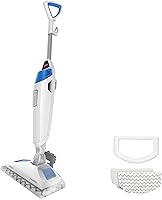
The Bissell PowerFresh 1940A has a removable water tank and 3 steam settings. Check its manual for the right water choice before filling it.
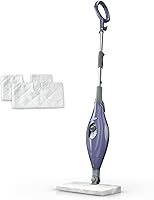
The Shark Steam & Scrub S8001 has a removable water tank and 3 steam modes: Light, Normal, and Deep.
How can you reduce mineral buildup in a steam mop?
Follow the manual’s water and descaling instructions, and empty the tank after use if directed. These steps help you care for the mop without guessing at a cleaning method.
Use only the amount of water needed for the cleaning session. Store the mop as its instructions describe, with the tank empty or filled as directed.
Don’t pour vinegar or a descaling product into the tank unless the manual allows it. If steam output drops or the mop won’t heat, use the model’s troubleshooting steps; why a Shark steam mop may not heat up covers common checks for that model.
Which water should you use in a steam mop?
Choose water according to your steam mop’s manual. Use distilled or demineralized water when the instructions call for it, and tap water only when the model permits it.
If you want a scented demineralized option, Bissell Demineralized Steam Mop Water has an Eucalyptus Mint scent. For general care, see how to clean steam mop pads after cleaning.
Frequently asked questions
Can you use tap water in a steam mop?
Sometimes, but check your steam mop’s manual first. Some models allow tap water, while others recommend distilled or demineralized water to limit mineral deposits.
If your water is hard, follow the manual’s guidance for your model.
Is distilled water better for a steam mop?
Distilled water has fewer minerals than tap water, so it can help limit mineral deposits in a steam mop. Whether it’s right depends on the model.
Follow the manual, especially if the mop has a filter or a specific water requirement.
Can I put vinegar in a steam mop?
Don’t add vinegar unless your steam mop’s manual specifically allows it. Use the cleaning and descaling steps recommended for your model.
How often should I descale a steam mop?
Follow the manual’s descaling schedule, since the right interval depends on the mop and your water. If steam output drops or the mop stops heating, check the troubleshooting instructions before descaling; those symptoms can have more than one cause.