What Are Steam Mops Good For?
Steam mops are good for cleaning and sanitizing sealed hard floors, grout lines, and tough stuck-on messes using only water. They are not suitable for carpets, rugs, or unsealed and waxed wood floors.
On this page (10 sections)
- What are steam mops good for?
- Which floors can you safely steam?
- Which floors should you keep a steam mop off?
- How do steam mops handle grout and stuck-on messes?
- Are steam mops good for sanitizing?
- How do steam mops compare with a spin mop?
- How does a steam mop differ from a full steam cleaner?
- Which steam mop fits your floors?
- What are steam mops not good for?
- The bottom line on steam mop uses
Steam mops are good for cleaning and sanitizing sealed hard floors, grout lines, and tough stuck-on messes using only water. They are not suitable for carpets, rugs, or unsealed and waxed wood floors.
The short answer to what are steam mops good for is simple: they replace a bucket and a chemical cleaner on surfaces that can handle heat and moisture. Knowing which floors those are is the whole decision.
What are steam mops good for?
Sealed hard floors and the grime that clings to them are the core job. A steam mop heats water to about 212 °F and releases it as vapor through a microfiber pad, so the heat loosens dirt while the pad lifts it away.
That makes steam mops good for everyday film on kitchen tile, bathroom floors, and entryways. Bissell says its PowerFresh 1940A kills 99.9% of germs, bacteria, and viruses when used as directed, and Shark makes the same claim for the S3501.
The steam also reaches places a damp mop struggles with. Grout lines, textured tile, and the edges around baseboards get a deeper clean because the vapor works into the surface rather than sitting on top of it.
The other everyday win is time. Both mops in this guide start steaming in about 30 seconds, so a spill on the kitchen floor does not mean filling a bucket and waiting for a mop to soak.
Which floors can you safely steam?
Sealed surfaces only. Steam is safe on sealed hardwood, tile and ceramic, granite, marble, laminate, vinyl, and stone when the manufacturer allows it.
Both the Bissell PowerFresh and the Shark S3501 list these sealed floors as suitable.
The word "sealed" does the heavy lifting. A finish that repels liquid keeps steam from soaking into the material, and that is what protects the floor.
Check a hidden corner first if you are unsure about the finish. A small test patch tells you more than a label, and it takes less than a minute.
The bigger the mop head, the faster a floor goes. The PowerFresh has a 12-inch cleaning path, so a kitchen or hallway takes fewer passes than with a narrow head.
The Shark's rectangular head covers a similar strip and its swivel steering lets you turn it around table legs and into corners without lifting the whole unit.
Both are corded machines, so plan the outlet before you start. The Bissell runs on a 23-foot power cord, which reaches across most rooms without an extension lead.
The Shark also has a long cord for a wide cleaning radius. Neither has a battery to run down, which is why they can keep the steam going as long as the tank holds water.
Which floors should you keep a steam mop off?
Unsealed wood, waxed floors, carpets, and rugs are off limits. Steam pushes moisture into open wood grain, which can cause swelling, warping, and lifted seams over time.
Waxed wood and waxed linoleum are a poor match too. Heat softens the wax, so the finish dulls or strips unevenly and needs redoing sooner.
Carpet and rugs should never see a steam mop. The pad cannot work through pile, and trapped moisture in a carpet is a mold risk.
For those surfaces you need a carpet cleaner or a vacuum.
Older floors with worn or patchy sealant deserve the same caution. A finish that has thinned in high-traffic spots no longer blocks moisture, and steam can find those weak points first.
Test the worn area before you commit to the whole room.
The safe habit is to keep the mop moving. Holding a steam head still on any floor pushes more heat and moisture into one spot than the surface needs.
A steady pass does the cleaning without giving the water time to soak in.
How do steam mops handle grout and stuck-on messes?
Very well, with the right attachment. Steam softens dried food, grease splatter, and soap scum, and a brush or scrubber breaks the loosened grime out of the lines.
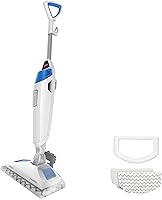
The Bissell PowerFresh 1940A has a flip-down Easy Scrubber built into the head. You flip it down for grout buildup and dried-on spills, and it does the work without extra pressure.
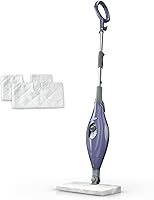
The Shark S3501 takes a different route. Its double-sided pads let you flip the head and keep cleaning with a fresh face, which helps on larger tile floors where one side loads up fast.
Pick the right head for the mess
The flip-down scrubber is the tool for grout lines, textured tile, and anything that has dried onto the floor. You flip it down and let the bristles work the loosened grime out of the lines.
The flat pad is the tool for open floor and everyday film. Flipping the head on the Shark gives you a second clean face for the same pass, so you can keep going on a big tile floor without stopping to swap pads.
Both approaches beat a sponge mop on grout because the steam does the softening before you scrub. You are not relying on arm strength alone to lift the dirt.
Are steam mops good for sanitizing?
Yes, on sealed floors, when you follow the directions. The heat is the cleaning agent, and both Bissell and Shark state that steam removes 99.9% of common household bacteria when used as directed.
That matters in bathrooms, kitchens, and homes with pets or young children. You get sanitizing without leaving a chemical residue behind, because the mop uses water rather than a detergent.
The catch is dwell time. You need to move slowly and let the steam sit on the surface for the time the maker specifies, not race across the room.
The Bissell PowerFresh also takes scent discs, so you can add a Spring Breeze note to the steam while you sanitize. That is a comfort feature, not a cleaning one, but it makes a bathroom or kitchen smell fresher without a separate air freshener.
How do steam mops compare with a spin mop?
A steam mop sanitizes; a spin mop scrubs and lifts more water. A spin mop with a bucket lets you wring the head and control moisture, which suits big spills and floors that should not get much steam.
A steam mop needs no bucket, dries faster, and adds heat sanitizing. It is lighter to carry room to room and stores in a closet.
The trade-off is control. You cannot dial back the moisture the way you can with a wrung-out spin mop, so delicate or moisture-sensitive floors favor the bucket.
Our steam mop vs spin mop comparison breaks down the daily differences.
Weight is part of the same trade-off. The Shark S3501 is under 5 pounds, so carrying it upstairs and around furniture is easy.
The Bissell PowerFresh is 6.2 pounds, heavier but still manageable, and its scrubber means you skip a separate scrub brush for grout.
How does a steam mop differ from a full steam cleaner?
A steam mop cleans floors; a steam cleaner handles detail work. A steam mop is an upright with a wide head and a pad, built for open floor areas in one pass.
A handheld or multi-tool steam cleaner adds brushes and nozzles for grout corners, stove tops, tile walls, and window tracks. It cleans surfaces a mop head cannot reach.
Many homes end up with both, or with a convertible unit. If you mostly have open hard floors, a mop is the simpler buy.
Our steam mop vs steam cleaner guide explains when the extra attachments earn their space.
Which steam mop fits your floors?
The Bissell PowerFresh 1940A is the better fit for most homes with mixed sealed floors and grout. Its 12-inch cleaning path, three steam settings, and flip-down scrubber cover everyday dirt and tough spills in one tool.
The three steam settings let you match the steam to the job. A low setting is enough for a quick refresh on sealed wood or laminate, while the higher settings handle stuck-on spills and grout buildup.
The 16-fluid-ounce tank is removable, so you carry it to the sink instead of carrying the mop.
The Shark Steam Pocket Mop S3501 weighs under 5 pounds and swivels around furniture and into tight spaces. Its two washable double-sided pads mean less stopping to swap cloths.
The 15.2-fluid-ounce tank is large enough for a typical floor before a refill, and the filling flask makes topping it up tidy.
Tap water leaves mineral scale inside a steam mop over time. Bissell's demineralized steam mop water is a simple way to avoid that, and the eucalyptus mint scent adds a fresh note as you clean.
Our score weighs specs, features and buyer feedback against what you're shopping for. For more options on each brand, see the Bissell steam mop and Shark steam mop roundups.
What are steam mops not good for?
Anything that soaks up water or cannot take heat. Carpets, rugs, upholstery, unsealed wood, waxed finishes, and cold cell foam are all poor candidates.
Steam can stain, warp, or destroy them.
They are also not the tool for heavy debris. Dry sweeping or vacuuming first keeps the pad from smearing crumbs around the floor.
The bottom line on steam mop uses
Steam mops are good for sealed hard floors, grout, and stuck-on messes, and they sanitize without chemicals. They are not for carpet, rugs, or unsealed and waxed wood.
Pick the Bissell PowerFresh 1940A for grout and mixed sealed floors. Choose the Shark S3501 for light weight and tight spaces.
Add demineralized water to protect the machine. For broader buying advice, browse our steam floor cleaners category.
Frequently asked questions
Can a steam mop be used on laminate flooring?
Yes, on sealed laminate only. Water can seep into seams and swell the core if the seal is worn or the planks are loose, so test a hidden area first and keep the mop moving.
Do steam mops clean grout effectively?
They do a good job on grout when you use a brush attachment or the flip-down scrubber some models include. The steam loosens dirt and grease in the lines, and the brush lifts it out.
Can I use a steam mop on a waxed floor?
No. Steam melts wax and dulls the finish, and it can lift the coating unevenly.
Keep steam mops off waxed wood, waxed linoleum, and any floor finished with a soft wax product.
Is a steam mop safe for pets and children?
The floors are safe once they dry, which takes only a few minutes. The mop itself gets very hot while running, so keep pets and children away from the head and the steam while you clean.
How often should I use a steam mop?
Once a week suits most sealed hard floors, with spot use for spills. High-traffic kitchens and bathrooms may need two passes a week, while a quick refresh is enough in lighter-use rooms.