Types of Steam Cleaners Explained
The main types of steam cleaners are upright steam mops for sealed hard floors, canister steam cleaners for detail work and wide surfaces, and lift-away or hybrid models that do both. Pick an upright for routine floor cleaning, a canister for grout and appliances, and a hybrid when you want one machine for the whole home.
On this page (9 sections)
- What are the main types of steam cleaners?
- How does an upright steam mop work?
- How does a canister steam cleaner work?
- What is a lift-away or hybrid steam cleaner?
- Which type of steam cleaner suits each surface?
- Which type is easiest to use every day?
- What should you check before buying any type?
- How do steam cleaners compare by format?
- Which type of steam cleaner should you pick?
The main types of steam cleaners are upright steam mops for sealed hard floors, canister steam cleaners for detail work and wide surfaces, and lift-away or hybrid models that do both. Pick an upright for routine floor cleaning, a canister for grout and appliances, and a hybrid when one machine has to cover the whole home.
The type you choose should follow the cleaning you do most. A household with wall-to-wall sealed tile needs a different tool from someone chasing grime in shower grout and stovetops.
A steam mop and a canister also differ in water capacity, heat-up time and how much you have to move the machine around.
This guide walks through each format with real examples. It also covers which surfaces each type suits and where each one falls short.
If you are still weighing the two main formats head to head, our steam mop vs steam cleaner comparison breaks down the trade-offs.
What are the main types of steam cleaners?
The three types that matter for most homes are upright steam mops, canister steam cleaners and lift-away hybrids. Each one uses steam made from tap water, but they differ in how you hold the machine, what tools they include and how much floor they cover per tank.
An upright steam mop is a stick you push across sealed hard floors. A canister has a separate tank body connected by a hose, with tools you swap for floors, grout, counters and more.
A lift-away is an upright whose floor unit detaches so you can carry the steam head around as a handheld cleaner.
These categories matter more than brand names when you are shopping. The format decides the cleaning jobs a machine can handle, how long it runs and how much storage it needs.
A steam mop for floors is quick and light; a canister is slower to set up but reaches more places.
Most people end up choosing by floor area and by how often they clean above-floor surfaces. A small apartment with sealed laminate needs a basic upright.
A house with tile floors, grout and a car to detail gets more value from a canister or hybrid.
Pick the format first, then the model. The buying decision follows from the cleaning jobs you actually do.
How does an upright steam mop work?
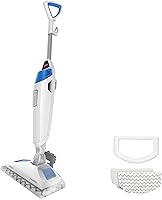
An upright steam mop heats water in a tank built into the handle or head and releases steam through a pad on the floor. You push it like a broom, and the pad picks up loosened dirt while the steam sanitizes the surface.
The format is simple and fast. Water goes in a small tank, the mop heats in seconds or a couple of minutes, and you work across the floor in passes.
Pads are usually washable microfiber, so you swap them between rooms or after heavy messes.
Upright mops work best on large, flat sealed floors such as tile, laminate, vinyl and sealed hardwood. They are lighter than canisters and need no hose or tool swapping.
The trade-off is reach: a mop cleans floors and not much else, and its tank empties faster than a large canister.
Steam level control matters more than wattage on this type. A low setting lets you refresh sealed floors without leaving them wet, while a high setting lifts stuck-on messes.
Self-standing storage and a long cord make everyday use easier.
Pick an upright when floors are your main job and you want the lightest, fastest tool for the whole room. Our steam cleaner for floors buyer's guide covers the features to compare before you order.
Amazon Basics Steam Mop: simple everyday floor cleaning
The Amazon Basics Steam Mop is a straightforward upright for sealed hard floors. It heats in 30 seconds and has three steam levels, so you can move from a light refresh to a heavier pass without waiting.
Its 15 oz tank is small compared with a canister, so expect to refill more often in a large room. The upside is quick heat-up and light weight: 1.81 kg, with a self-standing design and a 20-foot cord with a cable hook.
Amazon Basics says it removes 99.9% of bacteria from sealed hard floors using tap water only. The kit includes three washable microfiber pads, a filling flask and a plastic scrubber.
It suits hardwood, tile, laminate, vinyl, stone and marble.
Pick it for routine floor cleaning in an apartment or a home with mostly sealed hard floors. If you also need to steam grout, upholstery or appliances, this mop cannot reach those jobs.
For more upright options, see our roundup of the best steam cleaners for floors.
How does a canister steam cleaner work?
A canister steam cleaner keeps the water tank and boiler in a body you set down or roll, then sends steam through a hose to a tool in your hand. That separation is what makes it a detail cleaner as well as a floor cleaner.
You attach a floor mop head for large areas, or a brush, nozzle, scraper or squeegee for grout, tile, counters, windows and car interiors. The hose adds reach and lets you work at different heights without moving the whole machine.
Water capacity is much larger, so a session lasts longer between refills.
The format is heavier and slower to set up than an upright. Heat-up takes longer because there is more water to bring to temperature.
You also manage a hose and a set of accessories, which takes storage space.
Canisters earn their place when grout, appliances, bathrooms and vehicles are part of the cleaning routine. Variable steam control and a steam lock help on long jobs.
Pressure matters here: more pressure pushes steam into grout lines and crevices that a flat mop pad glides over.
Pick a canister when detail work is the reason you want steam. A Bissell steam mop is a better fit if you only ever clean floors and want something light.
McCulloch MC1385 Canister Steam Cleaner: detail work and wide surfaces
The McCulloch MC1385 is the canister type at its most capable. It heats a 64 oz tank in under 12 minutes and McCulloch says it provides up to 120 minutes of steam.
A session that long means fewer interruptions in a big cleaning job.
Its 23 accessories include a floor mop, mop pads, nylon brushes, a brass brush, an angled nozzle, a scrub pad, a scraper and a squeegee. Onboard storage and an included bag keep the set together.
The hose and 18-foot cord give it reach across a room and into tight spots.
McCulloch rates the pressure at 4 bar (58 PSI) with variable steam control and an optional steam lock. The steam reaches over 200°F and cleans without harsh chemicals.
The weight is 13 lb, which is the trade-off for the larger tank.
Pick it when grout lines, tile, grills, appliances or car interiors are on your list. It is more machine than a sealed-floor household needs.
For a floor-first alternative, compare the best steam cleaners for floors.
What is a lift-away or hybrid steam cleaner?
A lift-away steam cleaner is an upright mop with a detachable steam unit that becomes a handheld cleaner. You push it as a mop on sealed floors, then lift the body off to steam countertops, grout, upholstery and car interiors with the tools.
This hybrid format aims to cover the jobs of both an upright and a small canister. You get the speed of a mop for floors and the reach of a handheld for detail work.
The tank is usually smaller than a canister's, so long sessions mean refills.
The design suits homes where one machine has to do everything and storage space is limited. You avoid buying two tools and two sets of pads.
The catch is that a hybrid rarely matches a full canister on capacity or pressure, and it rarely matches a simple mop on light weight.
Lift-away models usually include a hose and a few specialized tools: a flat pad tool, a scraper, a nylon brush and a grout brush. Steam modes on the floor setting let you switch between light, normal and deep cleaning.
Pick a hybrid when you want one steam tool for the whole home and can accept a smaller tank. If your floors are the only concern, a basic upright is cheaper and lighter.
Shark Lift-Away Steam Mop S3972BRN: one tool for the whole home
The Shark Lift-Away S3972BRN is the hybrid pick here. It works as an upright steam mop on sealed hard floors and detaches into a handheld steamer for counters, bathrooms, upholstery, car interiors and grout.
It has three floor steam modes: Light for quick cleanups, Normal for everyday use and Deep for stuck-on messes. The kit includes a double-sided Dirt Grip pad, a fill flask, an accessory hose, a flat pad tool, a scraper, a nylon precision brush and a grout brush.
Shark says it removes 99.9% of common household bacteria from sealed hard floors using water only.
Its 12.85 fl oz tank is smaller than the McCulloch canister's, so refills come sooner on big jobs. At 7 lb it is heavier than the Amazon Basics mop but far easier to carry than a canister.
The detachable design is what makes that weight worthwhile.
Pick it when you want floor cleaning and handheld detail work from one machine. It suits kitchens and bathrooms with mixed surfaces, not just open sealed flooring.
Which type of steam cleaner suits each surface?
Match the format to the surface, because the wrong type either cannot reach the mess or is heavier than the job needs. Sealed floors, grout, upholstery and appliances each favor a different machine.
| Surface | Best format | Why it fits |
|---|---|---|
| Sealed hardwood, laminate, vinyl | Upright steam mop | Light, fast, controlled steam on flat sealed floors |
| Large sealed tile floors | Upright or hybrid | Wide mop head covers floor quickly |
| Grout lines and tile gaps | Canister or hybrid with grout brush | Tools reach into narrow lines |
| Countertops, stovetops, ovens | Canister or hybrid | Handheld tools and scrapers target food residue |
| Bathrooms and showers | Hybrid or canister | Grout brush and precision brush reach corners |
| Upholstery and car interiors | Hybrid or canister | Handheld steam with a pad or nozzle |
| Windows and screens | Canister with squeegee | Squeegee attachment clears glass |
| Grills and outdoor surfaces | Canister | Brushes and pressure handle baked-on grease |
The Amazon Basics upright fits the first row well and nothing below it. The Shark hybrid covers most rows in one tool.
The McCulloch canister handles the detail rows best, with the largest tank and the widest accessory set.
Check the seal first. Steam belongs on sealed surfaces only, and finishes that are worn or unsealed can take water damage.
When in doubt about a floor finish, test a small hidden spot first.
Which type is easiest to use every day?
The easiest type for daily use is the upright steam mop, because it is light, heats fast and needs no setup. A hybrid is a close second for homes with mixed surfaces, and a canister takes the most effort.
Weight and heat-up time set the daily-use ranking. The Amazon Basics mop weighs 1.81 kg and heats in 30 seconds.
The Shark hybrid weighs 7 lb and switches modes with a button. The McCulloch canister weighs 13 lb and takes under 12 minutes to heat, with a hose to manage.
Tank size flips the ranking on big jobs. The McCulloch's 64 oz tank and up to 120 minutes of steam mean fewer refills than the 15 oz mop or the 12.85 fl oz hybrid.
For a whole-house deep clean, the heavier machine saves time overall.
Cord length also matters. The Amazon Basics has a 20-foot cord, the McCulloch has an 18-foot cord plus a 7-foot hose, and the Shark pairs its cord with the detachable body for reach.
Longer reach means fewer outlet changes.
Pick for your normal session, not your worst one. If you steam a few rooms weekly, the light mop wins.
If you steam twice a year and go deep, the canister's capacity pays off.
What should you check before buying any type?
Before you buy, confirm the floor seal, the tank size and the tools included, then check the weight and cord length against your space. These four checks catch most buying mistakes across all types of steam cleaners.
- Confirm your hard floors are sealed. Steam is not for unsealed wood, and some finishes react badly to heat and moisture.
- Match tank size to your rooms. Small tanks mean refills mid-job; large tanks mean longer heat-up and more weight.
- List the tools you need. A grout brush or scraper only helps if it comes in the box.
- Check weight and cord length. A 13 lb canister and a 1.81 kg mop feel very different at the end of a cleaning session.
Warranty and support vary by brand, so read the maker's terms before ordering. Also check the water type the maker recommends; most of these machines run on ordinary tap water.
Buy for the jobs you do most and the storage you have. A machine that is awkward to set up stays in the closet.
How do steam cleaners compare by format?
The three formats differ most in capacity, reach and weight, and those three numbers explain most of the choice. Here is how the examples here line up.
| Feature | Amazon Basics Steam Mop | Shark Lift-Away S3972BRN | McCulloch MC1385 |
|---|---|---|---|
| Format | Upright mop | Upright plus handheld | Canister with hose |
| Tank | 15 oz | 12.85 fl oz | 64 oz |
| Heat-up | 30 seconds | Heats up before use | Under 12 minutes |
| Weight | 1.81 kg | 7 lb | 13 lb |
| Steam control | 3 levels | 3 floor modes | Variable, with steam lock |
| Tools | 3 pads, flask, scrubber | Hose and 4 tools | 23 accessories |
| Cord | 20 ft | Cord plus detachable body | 18 ft cord, 7 ft hose |
The mop wins on speed and simplicity. The hybrid wins on versatility for its weight.
The canister wins on capacity and detail reach. None of them wins every column.
For a closer look at the two most common choices, our steam mop vs steam cleaner article compares floor-first and detail-first cleaning in more depth.
Which type of steam cleaner should you pick?
Pick by the mess you clean most, not by the longest feature list. Choose the upright steam mop for routine sealed floors, the canister for grout and detail work, and the lift-away hybrid when one machine has to cover the whole home.
The Amazon Basics Steam Mop suits apartments and homes with mostly sealed hard floors. It heats in 30 seconds, weighs 1.81 kg and includes three washable pads.
It is the simplest of the types of steam cleaners to live with day to day.
The McCulloch MC1385 suits tile and grout, appliances, grills and car interiors. Its 64 oz tank, up to 120 minutes of steam and 23 accessories make it the detail workhorse.
The 13 lb weight is the price of that capacity.
The Shark Lift-Away S3972BRN suits kitchens and bathrooms with mixed surfaces. It mops floors, then detaches for counters, grout and upholstery with four tools.
It is the middle option on weight and the strongest on versatility.
Decide with two questions: what surfaces will you steam, and how often? A floor-only answer points to the upright.
A detail-heavy answer points to the canister.
A mix points to the hybrid. For more floor-focused models, browse our best steam cleaners for floors picks.
Frequently asked questions
Which type of steam cleaner is best for tile floors?
An upright steam mop handles large sealed tile floors quickly, while a canister steam cleaner is the better pick for grout lines and tight corners. If your tile covers a lot of floor and the grout needs regular deep cleaning, a lift-away model covers both jobs.
Do all steam cleaners work on hardwood?
No. Steam cleaners should only be used on sealed hard floors, and standing water or too much steam can damage some finishes.
Check that your hardwood is fully sealed before steaming, and keep the mop moving rather than holding it in one spot.
Is a canister steam cleaner better than a steam mop?
A canister is better for detail work such as grout, appliances and car interiors because its hose and tools reach places a mop cannot. A steam mop is better for everyday floor cleaning because it is lighter and faster to set up for a whole room.
What is the difference between a steam mop and a steam cleaner?
A steam mop is an upright floor tool built for sealed hard floors, while a steam cleaner is a broader term for machines that also use tools on tile, grout, upholstery and appliances. Many canister and lift-away cleaners can do both jobs.