How to Use a Steam Mop Correctly
To use a steam mop correctly, fill the tank with water, wait for the heat-up light to go steady, then glide the head slowly over sealed hard floors without stopping in one spot. Work in strips, flip or swap pads when they load up, and unplug before emptying the tank.
On this page (10 sections)
- What should you check before the first steam mop session?
- How do you fill and start a steam mop correctly?
- Which steam setting should you use on each floor?
- How do you move the mop for an even clean?
- How do you handle pads and tough spots mid-clean?
- How long should a floor take to dry, and what slows it down?
- How do you clean and store a steam mop after use?
- How do you keep a steam mop working well over time?
- Which steam mop suits which home?
- How do you avoid the common steam mop mistakes?
To use a steam mop correctly, fill the tank with water, wait for the heat-up light to go steady, then glide the head slowly over sealed hard floors without stopping in one spot. Work in strips, flip or swap pads when they load up, and unplug before emptying the tank.
Most steam mop problems come from skipping one of those steps, not from the machine. The rest of this guide walks through each stage in order, from filling to storage, so your floor gets clean and your mop keeps working.
What should you check before the first steam mop session?
Check that your flooring is sealed and clear of loose debris before you plug in. Steam is safe on sealed hardwood, tile and ceramic, granite, marble, laminate and vinyl, but it can damage unsealed wood and open seams.
Sweep or vacuum first. Loose crumbs and hair turn into a paste under a damp pad, and a clear floor lets the head glide without snagging.
Read the maker's instructions for your model. The Bissell PowerFresh 1940A and the Amazon Basics steam mop both heat in 30 seconds, so warm-up isn't the slow part; setup and pad choice matter more.
Move rugs, pet bowls and cords out of the path. Plan to leave the room while the floor dries, since wet tile and sealed wood can be slick for a few minutes.
How do you fill and start a steam mop correctly?
Fill the tank with water to the marked line, close it firmly, and plug in. Plain tap water works, though demineralized water helps keep mineral scale out of the machine over time.
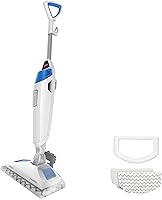
The Bissell PowerFresh 1940A has an XL removable tank that lifts off for refills at the sink. The Amazon Basics model uses a 15 oz tank and includes a filling flask.
Wait for the ready light or the steam to build. Both mops here heat in 30 seconds, and the Amazon Basics model offers three steam levels (high, medium and low), just like the Bissell's three settings.
Don't overfill past the max line. Water needs headroom for steam to form, and an overfilled tank can sputter or leak at the cap.
Which steam setting should you use on each floor?
Match the steam level to the floor and the mess: low for a quick refresh on sealed wood or laminate, medium for everyday tile and vinyl, and high for greasy kitchens or stuck-on spills.
The Bissell PowerFresh 1940A gives you three settings, so you can drop to a light steam on sealed hardwood and step up to high on ceramic tile. The Amazon Basics mop also has high, medium and low levels.
Start low and move up only if the floor still looks dull or sticky. High steam on a delicate sealed finish is more heat than the floor needs, and it leaves more moisture behind.
Dried food and grout lines take the high setting plus a little dwell time. Keep the head moving over a stubborn spot, or lift it slightly off the floor while steaming, rather than scrubbing hard or letting it park on one patch.
How do you move the mop for an even clean?
Glide slowly in overlapping strips, like vacuuming, and let the steam and pad do the work. Slow passes give the steam time to loosen dirt; fast scrubbing mostly pushes water around.
Work from the far corner toward the door so you don't walk over wet floor. Overlap each strip by a few inches so no band gets missed.
Keep the head moving. Holding a steam mop still in one spot pumps heat and moisture into one patch of floor, which is how warped boards and dull spots happen.
Use the flip-down scrubber on tough grime. The Bissell PowerFresh 1940A has an Easy Scrubber you flip down to break up dried-on messes and grout buildup without pressing harder.
How do you handle pads and tough spots mid-clean?
Swap or flip the pad when it stops gliding or starts leaving streaks. A loaded pad just spreads dirty water back onto the floor.
Stop the mop and let it cool for a moment before touching the pad. Flip it to the clean side for a small room, or fit a fresh pad for the next room.
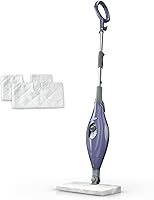
Both the Bissell PowerFresh 1940A and the Amazon Basics mop use reusable washable microfiber pads. The Amazon Basics kit includes three pads and a plastic scrubber tool for lifting hair and dirt.
Pre-treat really stuck messes by keeping the head moving over them on high steam, or lifting it slightly off the floor while steaming. For gluey spots the pad won't lift, a quick pass with the scrubber edge does more than repeated steaming.
How long should a floor take to dry, and what slows it down?
Most sealed hard floors dry in a few minutes after a slow pass, because the mop leaves only a thin film of moisture. Over-wetting is the main reason a floor stays damp.
Keep passes slow and steady rather than soaking the floor with repeated steam. If the pad is dripping or the floor looks wet behind the mop, the setting is too high or the pad is saturated.
Ventilate the room by opening a window or running a fan. Drying goes faster in a warm, airy room than in a closed one.
Don't walk on the floor until it looks dry to the eye. Socks or bare feet on a damp sealed floor can leave marks and track dust back across the clean surface.
How do you clean and store a steam mop after use?
Unplug the mop, let it cool, empty the tank, and wash the pad. Doing this after every session is what keeps the steam path clear and the pad absorbent.
Empty leftover water so it doesn't sit in the tank. Wipe the head and check the pad for trapped hair or grit before it goes in the wash.
Wash pads according to the maker's care instructions and let them air dry fully. Our guide to how to clean steam mop pads covers soaking, machine washing and drying without ruining the microfiber.
Wrap the cord loosely and store the mop upright. The Amazon Basics model stands on its own and has a cable management hook, which keeps the cord tidy between uses.
How do you keep a steam mop working well over time?
Use demineralized water when you can and descale when the maker says to. Mineral buildup is the quiet cause of weak steam and clogged nozzles.
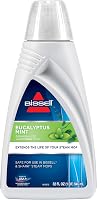
The BISSELL Eucalyptus Mint demineralized water is made with no harmful chemicals and fumes, leaves no residue, and Bissell says it helps extend the life of your machine. It also leaves a fresh Eucalyptus Mint scent as you clean.
Check the nozzles now and then. A blocked jet shows up as uneven steam across the head, and a quick wipe with a damp cloth usually clears it.
Replace pads when they stop absorbing or the edges fray. Reusable microfiber has a useful life, and a worn pad is the most common reason a mop seems to stop cleaning.
Which steam mop suits which home?
The Bissell PowerFresh 1940A is the pick for most homes, because its three steam settings, flip-down Easy Scrubber and XL removable tank cover everyday tile and tough grout in one machine. It's also designed for sealed hardwood, tile and ceramic, granite and marble, and its 23 ft power cord means fewer outlet changes.
The Amazon Basics steam mop is the budget pick for light upkeep. Its 1200-watt heater, three steam levels, 30-second heat-up and 15 oz tank handle routine refreshes, and the kit includes three washable pads plus a filling flask and scrubber tool.
The 20 ft cord and self-standing storage suit small homes.
Both mops are safe on sealed hard floors. Add the demineralized water to the Bissell PowerFresh 1940A if you have hard water or want a light scent, while the Amazon Basics mop is designed for tap water only.
If you're still choosing a model, our best steam mops for home use roundup compares the options in detail.
How do you avoid the common steam mop mistakes?
The mistakes to avoid are over-wetting, using steam on unsealed floors, and leaving the head parked in one place. Each one causes damage or leaves the floor dirtier than when you started.
Don't add vinegar or detergent to the tank unless the maker allows it. Plain water is the normal fill, and additives can clog the system or leave a film.
Don't steam a floor that's still covered in loose debris. Sweep first, then mop, so the pad stays clean longer.
Don't put a hot pad straight into the laundry basket. Let it cool, shake off loose grit, and wash it as the maker directs.
And don't skip the manual for your model. If you own a Bissell, our walkthrough on how to use a Bissell steam mop covers its specific controls.
For Shark owners, the same steps apply in how to use a Shark steam mop.
Once you know how to use a steam mop correctly, the routine is short: fill, heat, glide slowly, swap pads, empty and dry. Pick the Bissell PowerFresh 1940A for mixed tile and grout cleaning, or the Amazon Basics model for light, low-cost upkeep, and keep a spare pad and demineralized water on hand so the next session is easier than the last.
Frequently asked questions
How long does a steam mop take to heat up?
About 30 seconds for the models here. The Bissell PowerFresh 1940A and the Amazon Basics steam mop both heat in 30 seconds, so the indicator light tells you when steam is ready.
Can you use a steam mop on unsealed wood or laminate?
No. Steam mops are meant for sealed hard floors only.
Water can seep into open seams and swell the boards, so check that your wood, laminate or vinyl is sealed before you mop.
Should you add vinegar or detergent to a steam mop tank?
Plain water is the normal fill. Additives like vinegar or scented solutions go in only when the maker's instructions allow them, because some formulas can clog the system or leave residue.
Demineralized water is the safer choice for the machine.
How often should you wash steam mop pads?
Wash pads after every few mopping sessions, or sooner if they look dirty or stop gliding. The microfiber pads on these mops are reusable and washable, so a spare pad keeps you cleaning while one is in the laundry.
Is steam mopping safe around pets and children?
Keep pets and kids out of the room while you steam. The head and the steam are hot, and floors stay damp for a short time.
Let the floor dry before anyone walks across it.