Dupray Neat Steam Cleaner vs Dupray Neat Plus: Which Is Better? (November 2026)
Pick the Dupray Neat Plus if you want unlimited steam and a 90-second heat-up; pick the original Neat if you want the lower price and don't mind waiting 8 minutes for steam. For most floor-cleaning homes, the Neat Plus is the better fit.
On this page (10 sections)
- Dupray Neat vs Neat Plus at a glance
- Heat-up time: how long before you can clean?
- Steam time: what does unlimited steam mean for your home?
- Weight and handling: which is easier to carry?
- Accessories and surfaces: do both models cover the same jobs?
- Cleaning floors: how do the two steamers compare in daily use?
- Warranty and build: what else separates the two?
- Who should buy the Dupray Neat Plus?
- Who should buy the original Dupray Neat?
- The verdict: Neat Plus for most homes, original Neat for lighter budgets
Pick the Dupray Neat Plus if you want unlimited steam and a 90-second heat-up; pick the original Neat if you want to spend less and don't mind waiting 8 minutes for steam. For most floor-cleaning homes, the Neat Plus is the better fit.
The dupray neat steam cleaner vs dupray neat plus question comes down to how you clean, not to raw steam power. Both models heat water to 275°F and ship with 17 accessories, so the real differences are speed, steam time and weight.
This comparison checks the specs of each model and shows which one suits your floors, your rooms and your cleaning routine. Start with the table, then read the sections that matter to you.

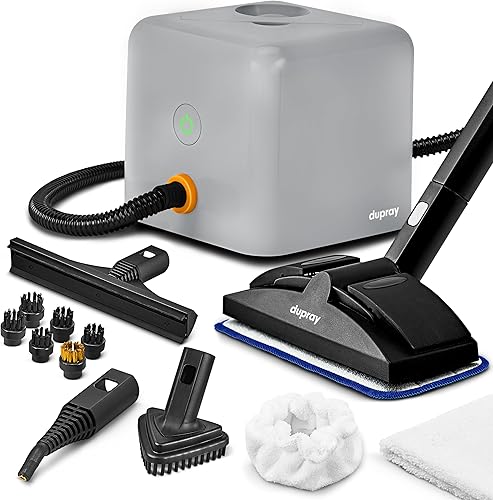 Best for long cleaning sessions
Dupray Neat Plus Steam Cleaner for Home
Dupray Neat vs Neat Plus at a glance
The Neat Plus wins on convenience; the original Neat wins on weight and cost. The table below puts the key numbers side by side.
| Product | Best for | Heat time | Tank volume | Steam time | Our score |
|---|---|---|---|---|---|
| Dupray Neat Steam Cleaner for Home | tight budgets | 8 minutes | 54 fl oz | 50 minutes per fill | 9.7 |
| Dupray Neat Plus Steam Cleaner for Home | long cleaning sessions | 90 seconds | Refill while running | Unlimited with refills | 9.3 |
The two steamers share more than they differ. Each runs on a corded electric supply and produces superheated steam up to 275°F (135°C), which Dupray says lifts dirt, grease and grime without harsh chemicals.
Both include a floor tool, window tool, steam lance, triangle tool, microfiber bonnet, microfiber cloth, three microfiber pads, five nylon brushes and a brass brush. Each uses water only, and Dupray says the steam is scientifically proven to eliminate 99.9% of viruses and bacteria in less than 30 seconds of direct contact.
Dupray notes that those figures come from third-party lab tests under controlled conditions and that results may vary. Even the model numbers stay in the family: the original lists DUP020WNA and the Plus lists DUP030GNA.
Both units share the same body footprint at 10.5 x 9.5 x 10.5 inches, so neither takes more closet or corner space than the other.
Heat-up time: how long before you can clean?
The Neat Plus is ready in 90 seconds, while the original Neat takes 8 minutes. That gap changes how the steamer fits into a quick tidy-up.
An 8-minute wait is fine when you plan a cleaning session. Fill the tank, switch on the steamer and use the wait to clear the floor or gather the tools you need.
The original Neat pairs that heat time with a heat light indicator so you can see when steam is ready.
The Neat Plus fits a different habit. Ninety seconds is close to the time it takes to fill a bucket or pull out the vacuum, so you can steam a spill or a small floor area without turning it into an event.
Its own light indicator tracks that rapid warm-up.
Neither time is long in absolute terms. The difference matters when you reach for the steamer several times a day or want a fast pass before guests arrive.
If your cleaning is a weekly deep session, the 8-minute wait on the original Neat is easy to absorb. If you steam daily or in short bursts, the 90-second start on the Neat Plus is the more practical choice.
Steam time: what does unlimited steam mean for your home?
The Neat Plus lets you refill while running, so steam time is limited only by how often you top up the tank. The original Neat gives 50 minutes of continuous steam per fill, then needs a cooldown before you refill.
Fifty minutes is a solid run for most homes. It covers a kitchen floor, a bathroom and a hallway with time to spare.
The catch is the pause at the end: the original Neat must cool down before you open the tank and add water.
The Neat Plus removes that pause. You refill the tank while the steamer is running, so a whole-house session keeps going without a break.
That suits open-plan floors, large tiled areas and homes with several bathrooms. Dupray calls it continuous steam technology and sells it as the feature for long, uninterrupted sessions.
The original Neat holds 54 fluid ounces in its tank. The Neat Plus lists a 1.6 liter tank, which is about 54 fluid ounces in metric.
So the water capacity is effectively the same on paper; the difference is that one tank can be topped up mid-run and the other cannot. A 50-minute run plus a cooldown pause still gets the job done.
The Plus just turns a stop-start session into a steady one. For a big move-out clean or a full house before hosting, that steady run is the reason to pay more.
Weight and handling: which is easier to carry?
The original Neat weighs 9 lb and the Neat Plus weighs 11 lb, so the original is easier to carry up stairs and between rooms. Both are wheeled designs meant to roll across floors.
Two pounds sounds small, but it adds up when you carry a steamer up and down stairs or lift it into a car for interior cleaning. Dupray designed the Neat family to be lightweight and easy to maneuver, with a carry handle and a wheeled base.
The original Neat's form factor is listed as handheld, while the Neat Plus is a canister. In practice, both use a hose and tools, so you guide the head while the body rolls or sits in place.
The original's lighter build suits people who move the steamer often or store it on a different floor from where they clean. The Neat Plus's extra 2 lb comes with the in-use refill system, so the weight buys you the unlimited steam.
If you leave the steamer on one floor and mostly clean there, the weight gap matters less. If you haul it around a two-story home, the original Neat's 9 lb is easier on your arms.
Accessories and surfaces: do both models cover the same jobs?
Both steamers include 17 accessories and cover the same surface list, so neither model limits the jobs you can do. The kit is built for whole-home cleaning.
Dupray lists tiles, grout, sealed hardwood, windows, mirrors, ovens, stovetops, countertops, grills, showers, bathtubs, sinks, curtains, pet beds and car interiors among the surfaces the Neat handles. The same kit covers them on both models.
The floor tool handles sealed hard floors. The triangle tool and brushes work grout lines and corners.
The window tool takes care of glass and mirrors, and the microfiber pads and bonnet pick up loosened dirt as you go. The steam lance and nylon brushes reach into tight spots like stovetop edges and shower tracks.
The original Neat's kit also includes a brass brush for the toughest spots, and the Neat Plus lists the same brass brush and the same five nylon brushes.
Storage and bundle options
A separate bundle of the original Neat adds a storage bag. The standard Neat Essential Pack ships with the 17 accessories but no bag.
The Neat Plus's Essential Pack also ships without a bag. Neither model includes a carpet cleaning attachment in the base kit, so treat carpet and upholstery work as light refreshing rather than deep extraction.
If you're still deciding between a handheld steamer and a mop-style tool for floors, our guide to the steam mop vs steam cleaner explains the difference in how each one cleans.
Cleaning floors: how do the two steamers compare in daily use?
Both models clean sealed hard floors with a floor tool and microfiber pads; the Plus keeps the steam flowing longer. For a typical kitchen or bathroom, the results come from the steam and the pad, not the model name.
The original Neat heats to 275°F and rolls across the floor on its wheeled base. You attach the floor tool and microfiber pad, then trigger steam on demand as you move.
The long hose means the body stays put while you work around furniture.
The Neat Plus does the same job with less downtime. You can steam a large tiled area, refill the tank when it runs low and keep going without waiting for the unit to cool.
Dupray also positions the Plus as a steam mop alternative, so you can use it as a floor mop, wall cleaner mop or window cleaner. The 2 lb weight difference also shows up in floor work: a lighter body is easier to nudge around table legs and into corners.
For grout lines and tile edges, both models use the same brushes and triangle tool. The steam loosens grime and the brush lifts it out.
Before you buy either, it's worth knowing which floors can take steam at all. Our guide to steam cleaners for floors covers sealed versus unsealed surfaces and the finishes to avoid.
Warranty and build: what else separates the two?
The Neat Plus lists a 2-year limited warranty and notes current manufacturing specs, while the original Neat's listing does not spell out a warranty term. That is one more detail to weigh beyond heat time and weight.
The Plus listing states that units available for purchase are produced under the latest design and manufacturing specifications, updated after August 2025. It also calls the coverage a 2-year limited warranty against defects in materials and workmanship.
The original Neat's listing does not state a warranty period in its product data. If warranty coverage matters to you, check the current Dupray terms for the model you buy before ordering.
Both machines use the same 275°F maximum temperature and the same wheeled, lightweight design language. The Plus carries a power light indicator and a steam on demand trigger among its special features; the original lists a heat light indicator and a steam on demand trigger.
The trigger matters on both: you control when steam releases, so you can wet a patch of floor or a grout line and then stop while you scrub.
Who should buy the Dupray Neat Plus?
The Neat Plus suits anyone who cleans large areas in one go and wants to skip the cooldown wait. The 90-second heat-up means it slots into a daily routine without planning ahead.
It is the pick for open-plan floors, several bathrooms in one session, and households that steam more than once a week. The refill-while-running design means you can keep the hose moving while you top up, so a long job stays one job.
It also fits car detailing and whole-home refreshes, where the same session covers floors, grout, windows and upholstery without a pause. The trade is the extra 2 lb and the higher price.
Who should buy the original Dupray Neat?
The original Neat suits budget-minded buyers and anyone who carries a steamer between floors. At 9 lb it is the lighter of the two, and its 50-minute run covers most weekly cleaning sessions.
It fits people who plan cleaning in blocks rather than quick bursts. You fill it once, steam the kitchen, bathroom and hallway, then let it cool before the next fill.
It is also the sensible first steamer for someone testing whether chemical-free cleaning fits their home. You get the same 275°F steam, the same 17 accessories and the same surface list for less money.
If you later want unlimited steam, you will know exactly what the upgrade buys.
The verdict: Neat Plus for most homes, original Neat for lighter budgets
The Dupray Neat Plus is the overall winner for most floor-cleaning homes, and the original Neat is the better value for lighter, planned cleaning. In this dupray neat vs dupray neat plus decision, speed and steam time tip the balance to the Plus.
The Plus heats in 90 seconds and lets you refill while running, so you can steam a whole home without stopping. The original Neat does the same core cleaning with the same 275°F steam and 17 accessories, but asks for an 8-minute wait and a cooldown pause.
Pick the Plus if your floors are large, your cleaning is frequent or you want to finish in one go. Pick the original Neat if you want to spend less, carry the steamer between floors and clean in planned sessions.
If you're comparing Dupray against other brands too, our Dupray Neat steam cleaner vs McCulloch 1385 comparison shows how the Neat stacks up against a rival steamer. And if you're weighing steam against a traditional spin mop for everyday floor cleaning, the steam mop vs spin mop breakdown helps you choose the right tool for the job.
Frequently asked questions
Does the Dupray Neat Plus really steam without stopping?
Yes. The Neat Plus lets you refill the water tank while the steamer is running, so there is no cooldown pause.
The original Neat gives about 50 minutes of steam per fill, then needs to cool before a refill.
Which Dupray Neat is lighter to carry up stairs?
The original Dupray Neat weighs 9 lb and the Neat Plus weighs 11 lb. That 2 lb gap matters if you carry the steamer between floors often.
Both are wheeled and designed to be moved around the home.
Do both Dupray models use the same accessories?
Both ship with 17 accessories, including a floor tool, window tool, steam lance, triangle tool, microfiber pads and nylon brushes. The Neat Plus arrives with its kit in the same basic set, so neither model locks you into a smaller tool set.
What surfaces can the Dupray Neat clean?
Dupray lists sealed floors, tile and grout, hardwood, windows, ovens, stovetops, countertops, showers, car interiors and upholstery among the surfaces the Neat handles. Use the right tool for each surface and follow the manual's guidance for sealed finishes.
Is the Neat Plus worth the extra money over the original Neat?
The Neat Plus is worth it if you clean large areas in one go and want to skip the cooldown wait. If you clean room by room in planned sessions, the original Neat does the same core job for less and weighs less too.