Are Steam Mops Better Than Regular Mops?
For most sealed hard floors, a steam mop is the better everyday tool because it loosens grime with hot steam and needs only water, while a regular mop gives you more control over cleaners and reach. Pick steam for speed on tile and sealed wood, and a regular mop for unsealed floors or heavy spills.
On this page (9 sections)
- Are steam mops better than regular mops for everyday cleaning?
- How does a steam mop actually clean compared with a wet mop?
- Which floors does each mop handle best?
- Do steam mops sanitize, and does that matter?
- What about steam mop vs spin mop for big messes?
- Are steam mops harder to use and care for?
- Do you need special water in a steam mop?
- When is a regular mop still the better pick?
- So are steam mops better than regular mops for your home?
For most sealed hard floors, a steam mop is the better everyday tool because it loosens grime with hot steam and needs only water, while a regular mop gives you more control over cleaners and reach. Pick steam for speed on tile and sealed wood, and a regular mop for unsealed floors or heavy spills.
The short version is that a steam mop wins on routine hard-floor cleaning and a regular mop wins on flexibility. Which one earns a spot in your closet depends on your floor type, how much mess you deal with, and how much setup you want to skip.
Are steam mops better than regular mops for everyday cleaning?
Yes, for sealed hard floors a steam mop is the faster everyday choice. It heats in about 30 seconds on many models and skips the bucket-and-wringer routine entirely.
You fill a small tank, wait briefly, and push the mop across the floor. The pad lifts dirt as the steam loosens it, and there is no soapy water to rinse away afterward.
A regular mop still works well, but it adds steps. You fill a bucket, add cleaner, wet the floor, wring the mop, and often wait for the floor to dry.
For a kitchen or bathroom you clean a few times a week, those saved steps add up. The steam mop is ready while a bucket mop is still being set up.
The mop pad matters as much as the steam here. Both picks in this post use washable microfiber, which is what grabs the loosened dirt instead of pushing it into the grout.
That is why a steam pass can leave a floor feeling dry in minutes, with no soapy film underfoot.
How does a steam mop actually clean compared with a wet mop?
A steam mop cleans with heat and moisture, not detergent. The water turns to steam, the steam softens dirt on the surface, and a microfiber pad wipes it away.
That means no soap residue left behind and no sticky film that attracts new dust. It also means you are not buying and storing floor cleaner.
A regular mop relies on a cleaning solution to break down grime, then on rinsing to remove it. That works, but it uses more water and more product.
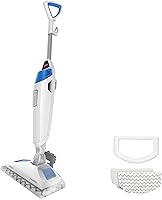
The Bissell PowerFresh 1940A shows the steam approach well. It has 3 steam settings so you can use a light pass for a quick refresh and more steam for stuck-on spills.
Its maximum temperature is 212 °F, the same as the Shark Steam Pocket Mop, so the heat that reaches the floor is in the same range on either brand.
The steam also reaches spots a mop head can struggle to press into, like grout lines and the edges of tile. A wet mop leaves those areas damp and soapy until they dry.
Which floors does each mop handle best?
Steam mops suit sealed hard surfaces, and regular mops cover everything else. Match the tool to the floor before you buy.
Steam mops work on ceramic tile, sealed hardwood, laminate, granite, marble and vinyl. The key word is sealed, since steam should not go into bare wood or unsealed stone.
Bissell lists sealed hardwood, tile/ceramic, granite and marble as surfaces for the PowerFresh. The Shark goes a step further and lists hardwood, marble, tile, stone, laminate and vinyl.
A regular mop handles those unsealed floors, plus garages, patios and any space where you want a specific cleaner. It is also easier for very large open areas because a wide head and a bucket let you cover ground fast.
If your home is mostly tile and sealed wood, steam fits the job. If you have a mix that includes unsealed stone, keep a regular mop for those rooms.
Our guide to the best steam mop for home use breaks down which models suit which floor types.
Do steam mops sanitize, and does that matter?
Steam can sanitize when used as directed, which is a real advantage on bathroom and kitchen floors. The heat does the work that a sanitizing cleaner would otherwise do.
Bissell says the PowerFresh 1940A removes 99.9% of germs, bacteria and viruses when used as directed. Shark says the Steam Pocket Mop S3501 removes 99.9% of common household bacteria using just water.
Both claims depend on following the maker's directions, such as holding the mop on the surface long enough. Read the guidance so you get the result the brand describes.
A regular mop can sanitize too, but only if you add a disinfecting cleaner and follow its dwell time. That is an extra purchase and an extra step.
For households with pets or small children, the no-chemical steam approach is a simple default. The Bissell steam mop range is built around that idea.
What about steam mop vs spin mop for big messes?
A spin mop handles big liquid spills better, while a steam mop handles dried-on grime better. They solve different problems, which is why the choice is not always either-or.
A spin mop lets you soak up a puddle and wring it out, so it is the tool for a knocked-over drink or a muddy entryway. Its bucket keeps dirty water away from clean water.
A steam mop is better for the mess that has dried and stuck, like sauce on tile or grout buildup. The steam loosens it and the pad scrubs it away.
The Bissell PowerFresh has a flip-down Easy Scrubber for exactly that kind of dried-on mess, so you can break it up without extra pressure.
For a closer look, see our full steam mop vs spin mop comparison.
Are steam mops harder to use and care for?
No, a steam mop is usually simpler to run, with a little pad maintenance afterward. The trade is a washable pad in exchange for a bucket you no longer fill.
You fill the tank, plug in the cord and go. The Bissell has a 23 ft power cord for reach across rooms and an XL removable tank that refills at the sink.
The Shark also has a long cord, so neither model leaves you hunting for an outlet mid-room.
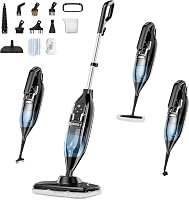
The Shark Steam Pocket Mop is light at under 5 lbs, so carrying it between rooms is easy. It includes 2 washable double-sided microfiber pads, and you flip the head to use both sides in one session.
The Bissell uses reusable washable microfiber pads as well.
Caring for either one means washing the pads. The Shark pads are machine washable, and Bissell's pads are reusable and washable too.
A regular mop needs rinsing, drying and bucket cleanup. Steam actually cuts that chore.
Do you need special water in a steam mop?
Tap water works in most steam mops, but demineralized water helps in hard-water areas. Mineral buildup is the main long-term enemy of a steam mop.
If your tap water is hard, minerals can collect inside the machine and reduce steam output over time. Using demineralized water is a simple way to avoid that.
BISSELL markets its demineralized water as a way to keep the machine running better, longer.
BISSELL makes a Eucalyptus Mint demineralized steam mop water for this purpose. It leaves a fresh scent and no residue, and it is made without harsh chemicals.
The bottle holds 32 fluid ounces.
This is one upkeep item a regular mop doesn't have. In exchange, you skip buying floor cleaner every month.
In soft-water areas, tap water is fine and you can skip the extra bottle. Either way, the S3501 and 1940A tank sizes, at 15.2 and 16 fluid ounces, tell you how much water a session uses before a refill.
When is a regular mop still the better pick?
A regular mop wins when your floors are unsealed, when you have a large liquid spill, or when you need a specific cleaner. Steam is not a universal replacement.
Unsealed stone, waxed wood and oiled floors should stay away from steam heat and moisture. A damp mop with the right cleaner is the safer choice there.
Outdoor spaces like garages and patios call for a mop and a degreaser that steam alone may not match. Same for any spot where oil needs a solvent.
And for a big puddle, a spin or string mop is simply faster because it can absorb and wring. A steam pad would just spread the water around until you stop and swap pads.
If your home is mostly unsealed or mixed flooring, keep a regular mop as the backup and use steam only where the floor is sealed.
So are steam mops better than regular mops for your home?
For sealed hard floors, yes: are steam mops better than regular mops is an easy call in steam's favor on speed, sanitizing and no-chemical cleaning. Keep a regular mop for unsealed floors and puddle-sized spills.
The Bissell PowerFresh 1940A is the pick for most homes because of its 3 steam settings, Easy Scrubber and 23 ft cord. Choose the lighter Shark Steam Pocket Mop if you want a compact mop with double-sided washable pads.
Add the demineralized water if your taps run hard and you want to protect the machine.
If you are still weighing corded steam against a bucket, our Shark steam mop roundup covers the lighter end of the market. Either way, the tool should match the floor, and the floor should be sealed before steam touches it.
Frequently asked questions
Are steam mops better than regular mops for tile floors?
Yes, steam mops usually suit tile better because hot steam reaches grout lines and dries fast with no soapy film. A regular mop still works for very large rooms where you want a wider head and a bucket of cleaner close at hand.
Can a steam mop replace a regular mop completely?
It can for routine cleaning on sealed hard floors. Keep a regular mop for unsealed stone, for soaking up big spills, and for any floor your manufacturer says should stay dry, since steam adds heat and moisture.
Do steam mops clean as well as mopping with detergent?
Steam lifts everyday dirt and sticky spots with heat and a microfiber pad, which handles most kitchen and bathroom floors. A detergent mop has an edge on greasy buildup outdoors or in garages, where a cleaner cuts oil that steam alone may spread around.
Is a steam mop safe on sealed hardwood?
It is when the finish is intact and the maker lists sealed wood as a suitable surface. Keep the mop moving, use the lowest steam setting, and skip it on waxed, oiled or worn boards where moisture can get into the wood.
How long does a steam mop take to heat up?
Many models start steaming in about 30 seconds, including the Bissell PowerFresh 1940A and the Shark Steam Pocket Mop S3501. That short wait is why steam often beats filling a bucket and wringing a mop before you start.